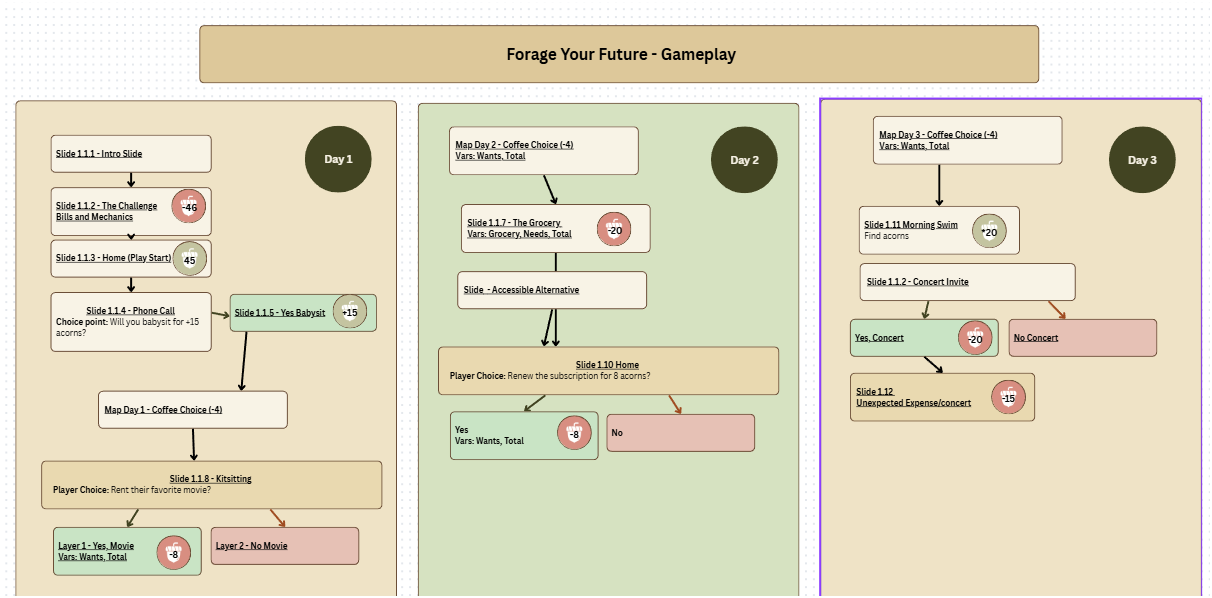
Narrative Flow Map
Early example of Storyboarding
Forage Your Future is an interactive budgeting game designed to make financial literacy intuitive, engaging, and memorable.
(Paste your Google Bucket URL or Storyline 360 share link into the src="" above.)
Interactive, gamified budgeting experience
College students & first-time budgeters
Instructional Designer
Developer
Writer & Narrative Design
UX
Articulate Storyline 360
Canva (asset creation)
Google Cloud Storage (hosting)
Story-driven learning · Accessibility · Learner agency · Immediate feedback
Many students arrive on campus having never built a real budget. Paychecks, refunds, and loan money feel abstract, and traditional slide decks or worksheets rarely stick. I needed a way to make budgeting feel concrete, emotional, and safe to experiment with, within the constraints of a short, self-paced module that could live inside the LMS.
The experience is designed for community college students and first-time budgeters: a mix of first-gen, working, and returning students who are comfortable with technology but often overwhelmed by money decisions.
After this experience, I wanted learners to:
Forage Your Future reframes budgeting as a story. Learners help Nibbles, a cute squirrel, decide how to spend a limited stash of acorns across housing, food, fun, and savings while still making it through the week.
The core game loop is simple:
Behind the scenes, Storyline variables track every decision, triggering different states, feedback, and endings. The result is a budgeting lesson that feels more like playing through a scenario than clicking “Next” on a traditional module.
Early example of Storyboarding
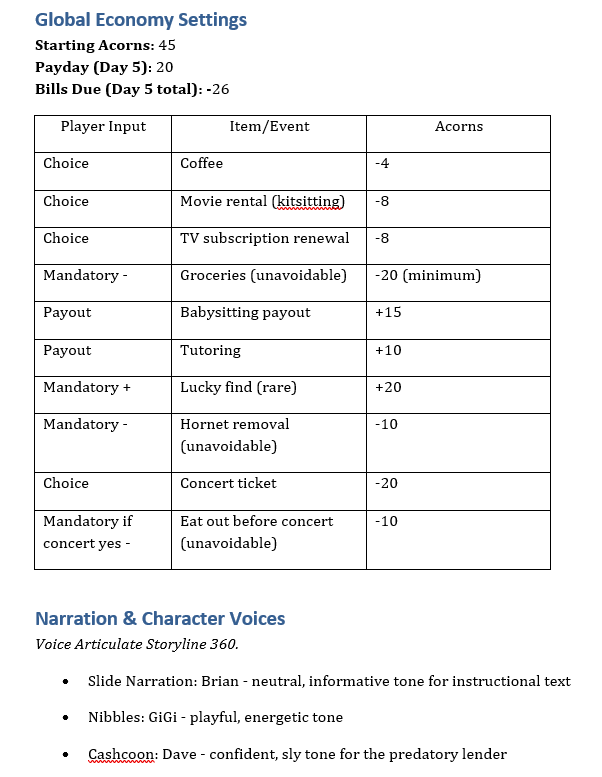
Economy and character tracking
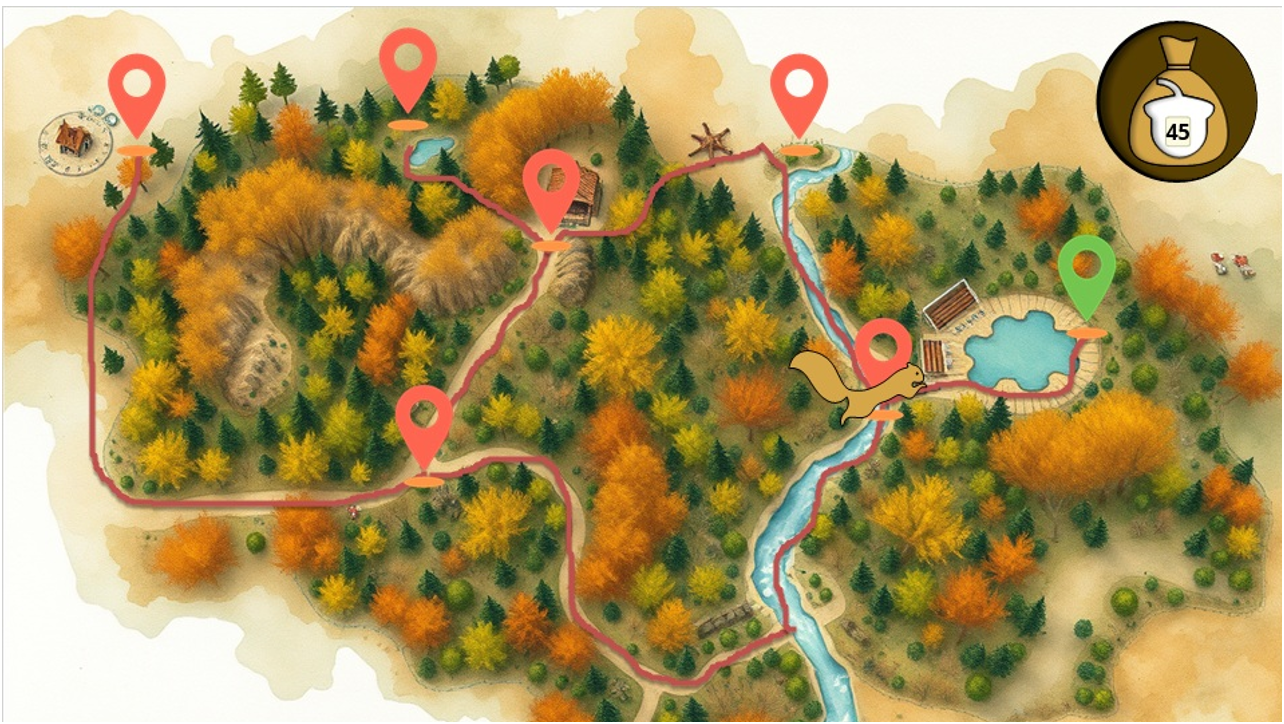
Early iteration of game map and purse
When I began this project, my primary goal was to deepen my understanding of complex triggers, variable logic, and conditional branching in Storyline. I achieved that many times over. As the game grew, I realized how ambitious it was for Storyline and that some mechanics are better suited for tools designed specifically for gameplay. Still, the hands-on troubleshooting was valuable and taught me a great deal.
With more time, I would like to rebuild this concept in a dedicated game or simulation engine. This would allow for more nuanced learner choices, a more dynamic and authentic economy system, and adaptive difficulty that mirrors the unpredictable financial decisions learners face in the real world.
This project clarified the type of work I want to pursue moving forward. It was challenging, fun, and energizing. I learned the importance of careful planning, organized asset management, and frequent iteration. This experience strengthened my interest in creating interactive learning experiences, especially game-based learning, simulations, and emerging technologies such as VR.